

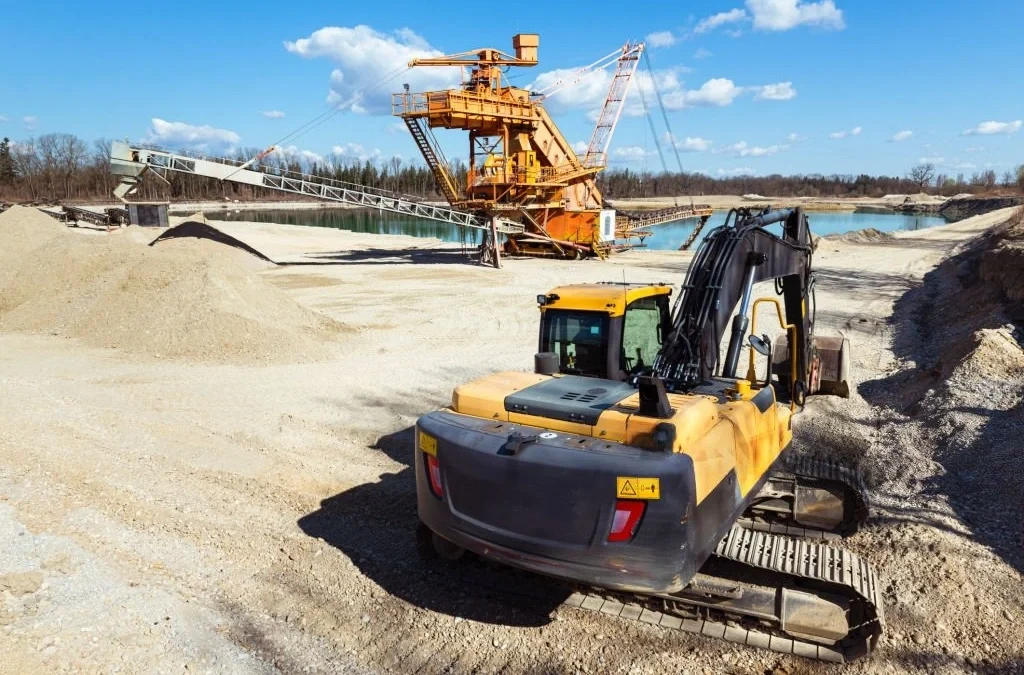
Advanced Grading and Excavation for Industrial Sites
Industrial sites place heavy demands on the land beneath them. Manufacturing facilities, warehouses, logistics centers, public works facilities, roadways, utility corridors, and large paved areas all depend on stable grades, strong subgrades, reliable drainage, and properly coordinated excavation.
That is why advanced grading and excavation are so important in industrial site development. These early construction phases help shape the land, prepare stable surfaces, support underground infrastructure, and reduce the risk of future settlement, drainage problems, access issues, and costly repairs.
For commercial, municipal, institutional, and industrial projects, experienced grading and excavation can help create a stronger foundation for the full construction sequence.
Why Industrial Sites Require Precision
Industrial sites often include heavier loads, larger buildings, wider paved areas, more equipment traffic, and more complex utility needs than smaller projects. A grading issue that might seem minor during early sitework can become a serious problem once the site is carrying truck traffic, machinery, storage areas, stormwater flows, or underground utility systems.
Precise grading and excavation help project teams control several important conditions:
- Building pad stability and foundation support
- Stormwater flow and drainage performance
- Roadway, parking lot, and loading area elevations
- Utility trench alignment, depth, and backfill quality
- Soil compaction and long-term settlement risk
- Access routes for equipment, trucks, crews, and inspections
- Final site restoration and finished surface performance
When grading and excavation are planned correctly, the site is better prepared for everything that follows. When they are rushed or poorly coordinated, the project may face delays, change orders, drainage corrections, pavement failures, or rework after other trades have already mobilized.
Understanding Grading and Excavation
Grading and excavation are closely related, but they serve different purposes in site development.
Grading shapes the land to meet the required elevations and drainage patterns. It includes cutting high areas, filling low areas, establishing slopes, preparing building pads, and creating stable surfaces for roads, parking lots, sidewalks, utilities, and structures.
Excavation removes soil, rock, debris, or unsuitable material to create space for foundations, utilities, stormwater systems, access roads, trenches, and other site infrastructure.
On industrial sites, these scopes often overlap with site preparation and development, commercial excavation services, earthmoving, utility installation, drainage planning, and final restoration.
Start with Site Evaluation and Planning
Advanced grading and excavation should begin before equipment arrives on site. The project team needs to understand existing conditions, design requirements, soil behavior, drainage patterns, access limitations, and utility conflicts.
Early planning may include reviewing surveys, geotechnical reports, civil drawings, utility maps, erosion control requirements, haul routes, staging needs, and inspection schedules. This helps the team identify potential problems before they turn into field delays.
For larger or more complex sites, survey technology can help connect design intent to field execution. Accurate layout, elevations, and site data help crews grade and excavate with more confidence and less guesswork.
Mass Grading for Large Industrial Sites
Industrial sites often require significant earthmoving before construction can begin. This may involve cutting high areas, filling low areas, balancing material across the site, preparing building pads, shaping roadways, and setting broad drainage patterns.
Mass grading services help establish the overall shape of the site. This phase is especially important when the project includes large buildings, truck courts, loading docks, parking areas, retention features, road improvements, or multiple construction phases.
Mass grading also affects cost and schedule. Efficient material movement can reduce unnecessary haul-off, import material, equipment hours, and rework. Poor planning can lead to wasted time, excess material handling, drainage issues, and unstable areas that need correction later.
Fine Grading for Finished Performance
Once the major earthmoving is complete, fine grading prepares the site for more precise finished conditions. This may include shaping building pads, pavement areas, sidewalks, landscaping zones, drainage swales, and areas that will receive aggregate base or surface improvements.
Fine grading services are critical because small elevation differences can affect drainage, accessibility, paving quality, and long-term site performance.
For industrial sites, fine grading is especially important near loading areas, truck routes, entrances, building edges, curbs, storm structures, and paved surfaces where water movement and surface durability matter.
Technology-Supported Grading and Excavation
Modern grading and excavation can be supported by GPS-guided equipment, survey tools, digital plans, and field coordination software. These tools help improve accuracy, reduce manual layout conflicts, and give operators clearer information during construction.
Technology can support:
- More accurate cut-and-fill execution
- Better control of elevations and slopes
- Reduced over-excavation and unnecessary material movement
- Improved grading consistency across large sites
- Clearer communication between field teams, project managers, and engineers
Technology is not a replacement for experienced operators. It is a tool that helps skilled crews execute complex work more precisely. Verdeterre’s equipment, survey resources, and project management integration help support this connection between planning and field execution.
Soil Compaction and Subgrade Stability
After excavation and grading, soil compaction helps create stable ground for buildings, roads, parking lots, utilities, and other infrastructure. Poor compaction can lead to settlement, pavement cracking, drainage problems, trip hazards, and future repairs.
Industrial sites often carry heavier loads than standard commercial properties, so subgrade performance matters. Truck traffic, equipment movement, storage areas, foundations, and loading zones all require stable support beneath the surface.
Compaction quality depends on soil type, moisture content, lift thickness, equipment selection, and testing requirements. If soil is too wet, too dry, unsuitable, or poorly placed, the site may not reach the density needed for long-term performance.
Compaction should be coordinated with aggregate base installation, paving preparation, trench backfill, utility installation, and final grading so the finished site performs as intended.
Utility Coordination During Industrial Excavation
Industrial sites often require extensive underground infrastructure. Water, sanitary sewer, storm sewer, electric, gas, communications, and process-related utilities may all need to be coordinated with building locations, access roads, pavement areas, drainage systems, and future maintenance routes.
Excavation for utilities must account for trench depth, alignment, bedding, backfill, compaction, inspections, tie-ins, and restoration. Poorly coordinated utility work can create conflicts with grading, paving, foundations, or other sitework phases.
Depending on the scope, Verdeterre can support utility-related work through site utilities, utility trenching, water main installation, sanitary sewer installation, and storm sewer installation.
On large industrial projects, utility coordination should happen early. Waiting until after major grading is complete can create expensive rework if underground infrastructure conflicts with the finished site design.
Drainage and Erosion Control
Drainage is one of the most important parts of industrial site grading. Large paved areas, rooftops, access roads, loading zones, and compacted surfaces can all change how water moves across the site.
Effective grading helps move water away from buildings, paved areas, utility corridors, and sensitive areas. Stormwater systems, swales, detention areas, inlet placement, and surface slopes all need to work together.
Erosion control is also essential during construction. Exposed soil, slopes, stockpiles, and disturbed areas can wash into drainage systems or nearby properties if not managed properly. Measures such as silt fence, inlet protection, stabilized entrances, sediment controls, and temporary drainage planning help protect the site during active work.
For projects with stormwater infrastructure, grading should be coordinated with storm sewer installation so temporary and permanent drainage systems support each other.
Common Challenges on Industrial Sites
Even with strong planning, industrial grading and excavation can uncover challenges once work begins. The goal is not to pretend these issues never happen. The goal is to identify them early and manage them with the right process.
Common challenges include:
- Unstable or unsuitable soils: Weak soils may need removal, stabilization, replacement material, or moisture conditioning.
- Weather delays: Rain, snow, freeze-thaw cycles, and wet soils can affect excavation, grading, compaction, and restoration.
- Unknown utilities: Existing underground infrastructure can create safety risks and schedule impacts if not located and coordinated.
- Drainage conflicts: Poor water management can damage work areas, slow construction, and affect finished surfaces.
- Access limitations: Large sites need safe haul routes, staging areas, equipment access, and coordination with active operations.
- Equipment needs: The scope may require specialized machines, attachments, or GPS-supported equipment to complete the work efficiently.
Experienced earthmoving contractors help manage these conditions by coordinating equipment, sequencing, field communication, and corrective work when conditions change.
Schedule and Cost Benefits of Better Planning
Advanced grading and excavation techniques can help reduce waste, improve accuracy, and limit avoidable rework. Better planning can also help owners understand cost risks earlier in the project.
For industrial sites, grading and excavation costs are often affected by soil conditions, material movement, utility conflicts, drainage requirements, haul-off needs, equipment requirements, weather, and inspection coordination.
When the work is planned carefully, the project team can make better decisions about:
- Cut-and-fill balance
- Material reuse or disposal
- Equipment selection
- Phasing and sequencing
- Utility trench locations
- Drainage and erosion control measures
- Final restoration needs
This does not eliminate every risk, because construction loves surprises like a raccoon loves trash. But it does give the project team a better chance of controlling cost, schedule, and quality.
Project Experience Matters
Industrial grading and excavation require more than equipment. They require practical field experience, strong coordination, and the ability to connect earthwork with utilities, drainage, access, safety, and final site performance.
Verdeterre’s project experience includes large-scale sitework and infrastructure scopes such as the Monroe County MDOT Facilities project, which involved earthwork, storm sewer, water main, and sanitary sewer systems across multiple ground-up facilities.
The Auburn Road Reconstruct – MDOT 38 project included water main installation, earthwork, and road reconstruction, while the Hilltop Apartments for Avalon Housing project included sitework, stormwater, water, and sanitary sewer systems for a multi-building development.
Projects like these show why grading, excavation, utilities, equipment, and project coordination need to work together from the beginning.
The Takeaway
Advanced grading and excavation help industrial sites support heavy use, complex infrastructure, reliable drainage, and long-term durability. From mass grading and excavation to compaction, utility coordination, stormwater planning, and fine grading, each step affects how the finished site performs.
Verdeterre supports Michigan clients with grading and excavation, commercial excavation, site work, site utilities, earthmoving, equipment, survey technology, and project management support for complex commercial, municipal, institutional, industrial, and infrastructure projects.
Explore our services or review our project profiles to see how Verdeterre prepares large-scale sites from the ground up.